AquaB Secures EIC Accelerator Support

AquaB has been announced as one of the recipients of a highly sought after Accelerator grant from the European Innovation Council. The financial support will assist the company in commercialising low-energy, low-maintenance water aeration based on its breakthrough electric field-based nanobubble generation technology.

AquaB is one of 75 innovative start-ups awarded support in this year’s EIC Accelerator. The companies were selected through a highly competitive process, in which 232 companies were interviewed by juries of experienced investors and entrepreneurs out of a total of more than 1000 applications. 

The EIC Accelerator offers start-ups and SMEs grants of up to €2.5 million combined with equity investments through the EIC Fund ranging from €0.5 to €15 million or more. In addition to financial support, all projects benefit from a range of Business Acceleration Services that provide access to leading expertise, corporates, investors and ecosystem actors.

Professor Niall English of AquaB welcomed the support. He said: 

“This is a big endorsement of the commercial potential of AquaB’s technical innovation, as well as recognition of the potential for energy efficient nanobubble generation to catalyse sustainability leaps forward in some of Europe’s most important industrial sectors. I’m thrilled that AquaB has secured this EIC Accelerator support, and I’m looking forward to delivering our exciting programme of innovation-led business development.” 

Since its launch in March 2021, over 7,000 start-ups and SMEs have sent their ideas and over 4000 have submitted full applications. The companies announced today were among the 1006 that submitted to the second 2022 cut-off on 15 June, and they join the 238 companies selected for funding by the EIC in 2021 and 2022.

European Innovation Council logo

Interview with AquaB Founders

Q: What have some of the key highlights been for AquaB in recent years?

MRG: Since Prof. English and I got started with our nano-bubbles invention almost five years ago, things have proceeded at a break-neck pace. There have been three PCT-patents and a steady stream of new generations of various reactor configurations appearing. So, some key highlights have been how the technology has developed.

NE: Yes, I agree. In addition, I would say that cultivation and engagement with the market has been most illuminating, in terms of identifying the needs of potential customers, as well as understanding new end-applications for this most promising of platform technologies.

Q: What have some of the biggest challenges been in AquaB’s development?What have some of the key highlights been for AquaB in recent years?

NE: Hah, you know how to ask some tough questions! Well, I think that the technology-transfer and IP-handling have been difficult to negotiate, as well as the mentality of some potential customers in wanting everything for free. Also, the near-expectation, or zeitgeist, in many innovation quarters nowadays seems to be that a small, innovative company would never contemplate, at least to some extent, “bootstrapping” and building up its finances that way, and thence through some form of possible debenture-finance, based on increasingly reliable revenues.

MRG: Yes, agreed to that. However, I would also say that overcoming communication barriers and different group’s expectations of levels of product testing is also a feature, as well as things “lost in translation” between, say, analytical-chemistry laboratory characterisation and engineering real nano-bubble generators for macroscopic performance.

Q: What is on AquaB’s agenda now?

NE: We are busy on further consolidation of earlier prototype trials and in developing commercial activities worldwide, especially in the US market. In terms of earlier “market-entry” goals, we feel that agriculture and irrigation are key markets, alongside fish-farms – although the broader arena of wastewater treatment is a truly huge opportunity on which we focus, naturally.

MRG: Yes, that is true. I would also state that fermentation is an important area – brewing, distilling and many industrial processes. That and hydrogenation reactions.

NE: Yes, I full agree. I would also state that we are focusing too on water-body aeration and carbonation – to either eliminate or cultivate algae, as the case may be.

MRG: One of the good points for platform-wide activity is that many of our NB generators are interchangeable for end-use applications, with relatively minor customisation and design re-fitting, based on a lot of in-house know-how.

Q: What’s next for AquaB?

MRG: The development of our latest configurations of our various types of generators, some of which you can see described on our website. Also, robust business models for their monetisation.

NE: That’s right. I would also say that we want to broaden our base of end-applications to take into account the platform-wide nature of our nano-phase technology. The arena of broader compliance with Paris-Accord climate goals, and associated “Green-Business” bonds to finance much of this, is an area where AquaB shall be proactive. Clearly, water treatment is a huge ultimate goal, in that perhaps about two-thirds of the energy inventory in wastewater treatment lies in water aeration – which we would seek to reduce dramatically.

Q: Well gentlemen, thanks for this quick catch-up. One final point: what advice might you give to other high-tech start-ups out there, or researchers/inventors thinking about “going for it” and setting up a business?

MRG: I think that developing the technology as much as possible before being in contact with potential ”beta-testers” and end-user “champions” is very useful. Overcoming disciplinary barriers between lab-chemistry folk, biologists, physicists and various species of engineer is vital, as technical terms often get “lost in translation” and different communities tend to have various “figures of merit” that appeal to them.

NE: Although it sounds often completely counter-cyclical with business-school textbook approaches to business development, I emphasise the idea of working tirelessly on developing the products and business development without the use of external equity investment, if possible. Sacrificing a good deal of time and energy to develop even one paying customer and consolidating that is all-important, and then the gradual build-up of revenues. In other words, old-fashioned grit and hard work. Trust yourself and you other co-founders, and be wary of any early “deals” that gives away control or market access. Work closely with the tech-transfer community and state funders, if applicable. We must thank UCD-Nova and Enterprise Ireland for their assistance in our earlier years at UCD, and we are very proud of our UCD roots and involvement.

Trial Data by AquaB in Water Treatment

Ammonia & Activated-sludge

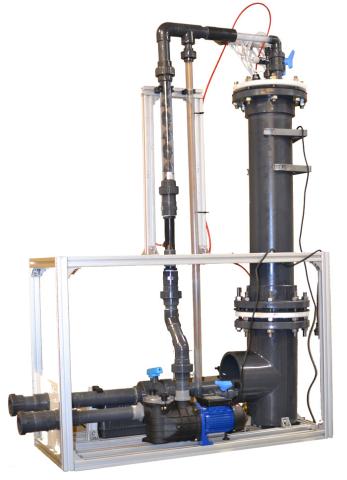
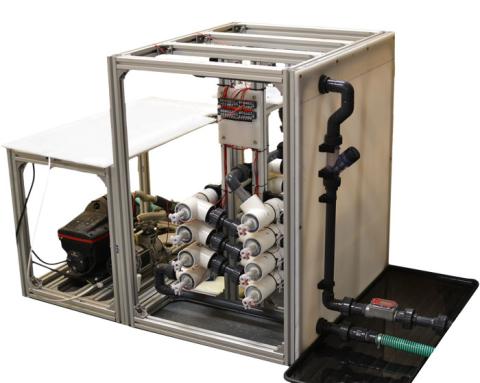
AquaB took meatpacking-plant wastewater with very high levels of ammonia, and applied the same activated-sludge culture therein in a nanobubble generator designed for continuous-flow processing of suspended-solids water.

Dealing with ammonia in wastewater treatment (WWT) is a huge challenge, especially with agricultural wastewater, e.g., from poultry, livestock and pig farmers, and through slaughterhouses. The oxidation and stripping of ammonia by NBs is very important, and NBs are showing themselves to be able to address by the presence of Reactive Oxygen Species (ROS). AquaB has also developed a NB generator which is capable of NB-aerating and nano-gasifying water containing suspended solids.

nanobubble generator designed for continuous-flow processing of suspended-solids water

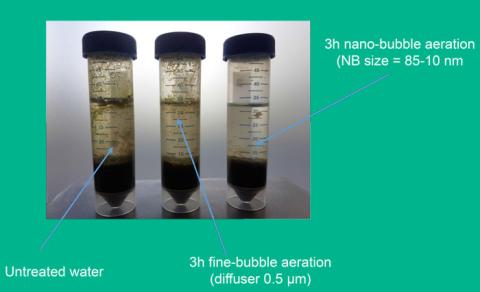
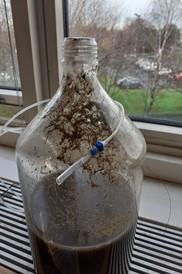
Taking in just ambient air, the oxidation/stripping of ammonia is spectacular in samples of activated-sludge water, when compared to fine bubbles.

comparison of nanobubbles and fine bubbles on activated-sludge water

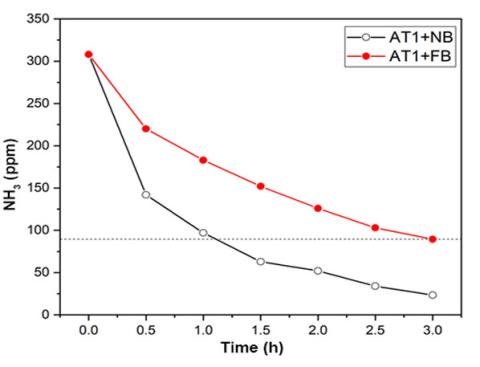
The kinetics of abiotic ammonia oxidation are impressive, in minutes to hours, in this AS culture -much less than many days for biological processes (using autotrophic bacteria, which tend to get “indigestion problems” if subject to high loads of ammonia, anyway).

graph showing the oxidation/stripping of ammonia in samples of activated-sludge water

The presence of reactive oxygen species (ROS), which are made inherently and naturally by AquaB’s electrostrictive nanobubble-generation approach, enhances ammonia degradation. Depending on the pH, the ammonia-handling kinetics mechanisms shift from stripping to oxidation.

The “reservoir effect” of nano-dissolved oxygen, at about 6-10 mg/l, in the nano-phase (NBs) being transported into the conventionally-dissolved state (i.e., “DO”, as measured by a standard Winkler electrochemical probe) keeps the DO at 3-3.5 mg/l – just perfect for AS!! Without NBs, and their “nano-resilience” to replenish DO in a self-correcting way, the DO plummets down to 1 mg/l.

Dissolved-Air Flotation

The nano-gasification of cleaner water, with little suspended solids, is important – whether aeration or carbonation, etc. This can be put to use in agriculture, cleaning, water-body aeration/carbonation, and Dissolved-Air Flotation. Also, in terms of Recirculation-Aeration Systems (RAS) and flocculation-based minerals separation, this is important.

Using nano-aeration in a continuous-flow generator, AquaB carried out recirculation.

oxygen-surge nanobubble generator

In a nutshell, with established NBs (without the robust, “thick skin” of AquaB NBs), they allow for much better surface-area-to-volume (A/V) ratio, and this is reflected in how micro- and nano-bubbles generally improve flotation results (which, incidentally, is also good for flocculation operations in mining operations – i.e., downstream processing of minerals separation).

However, the AquaB NBs allow for a far greater level of “thick skin”, owing to the ‘quasi-liquid layer’ inherent in the “bottom-up” way in which they are made (by sucking in gas at gas/liquid and bubble/liquid interfaces via electrostriction). This “hoovers up” or “mops up” a certain number of ions into their “electrostatic orbit” (affecting also a degree of “first-pass” desalination without osmosis, or, God forbid, evaporation). Because AquaB NBs have a much higher density – in effect, “ultra-dense NBs” – they then can (and do) adsorb a proportion ions into their ‘entourage’. This means that they would be expected to “take on” more ions, for example, than thinner-skinned, less stable NBs and micro-bubbles. In particular, the ROS can also lead to a degree of virus deactivation.

By forming these electrostatic, now-micron-sized “colonies” or communities of dense NBs with ions and microscopic/nanoscopic particulates “clinging on for dear life”, they then start to rise and float with substantially enhanced flocculation. “Naked” NBs, bereft of their cloak of ions, are not subject to buoyancy per se, but the larger communities do rise. Incidentally, this also boosts Dissolved Air Flotation, as one can see below in digestate water from anaerobic digestion – so as being able to scoop off the “organic-fertiliser gold” floating atop.

digestate water from anaerobic digestion

Nano-Aeration: Water-Body’s Algal-Bloom Manipulation

The blighting of under-aerated water bodies (e.g., waterways, ponds, canals, reservoirs) by algal blooms is a problem, especially if this leads to eutrophication of the water body. In another sense, being able to infuse CO2 in water in the form of NBs and have this a way of cultivating certain strains of algae is another possibility of “nano-phase engineering”.

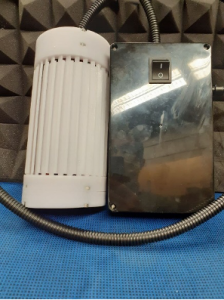
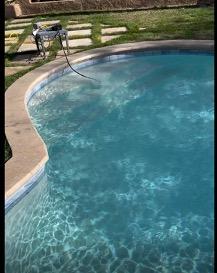
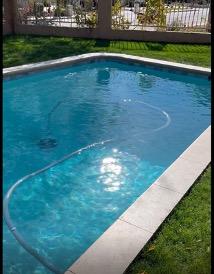
AquaB used a smaller-scale immersed design as per below – which is “plug-and-play”. We show photos of pristine water-body aeration in which eliminated algae, with “double saturation” of the oxygen solubility – in both traditionally- and nano-dissolved forms – at full saturation (DO – 8 mg/l and nano-dissolved state at approx. 10 mg/l).

submersible nanobubble generator
pristine water-body aeration which eliminated algae

Low-energy carbon capture

Background

The generation of biomethane for grid injection into the gas network and for road transportation is a crucial element of the 2030 Climate & Energy Framework and future low carbon strategy. Biogas can be generated using the Anaerobic Digestion (AD) process and historically it has been used to generate heat or electricity via a combined heat and power cycle (CHP). However, to achieve its maximum potential as a universal renewable fuel it must be purified to “fossil grid” specification (EN 16723).  At AquaB, we have developed a NB-enabled technology that will allow for the economic purification of biogas into biomethane for injection into a gas grid – capturing CO2 preferentially in water. We can also capture flue-gas carbon and other pollutants for water-wash and gas-absorption columns.

Opportunity

Currently there are a number of techniques used to separate CO2 from methane, including cryogenic separation, membrane technology, pressure swing adsorption (PSA) and solvent scrubbing. However, these technologies are designed for large volume separation (>1000NM3/Hr) and not for small scale applications. Some of these technologies are reasonably economically efficient for capacities in excess of 300 NM3/Hr and indeed membrane separation and chemical scrubbing technologies are also adequate in excess of 100 NM3/Hr. However, the trend throughout Europe is for smaller (20-200 NM3/Hr) biomethane purification capacities, and this is where the NBF technology offers a competitive and key advantage. The same applies to smaller point emitters of carbon, e.g., smaller cement works.

Innovation

We purify bio-gas, by generating nano-bubbles using our additive-free and energy-efficient breakthrough patented technology. This is done with the bio- or flue-gas in contact with liquid water (whether batch or continuous mode, or fed-batch, etc). The reason for differential take-up of gas, in nano-bubble (NB) form, into the water is that, even though de-facto methane solubility is around 30 times higher than its Henry’s-Law level in nano-bubble form, this is still very small in terms of mass per volume in water (mg/l) in absolute terms. With CO2 and H2S’s conventional (standard molecular-solvation) Henry’s-Law solubilities offering at least 40-50 times higher than CH4 in terms of absolute mass-per-volume level in water (i.e., in mg/l terms), a ~2-fold increase for CO2 solubility with NB creation from our breakthrough method leads to much more high absolute level of CO2 and H2S uptake into water – purifying very substantially the methane in a single-pass design.

Plant Growth

Irrigation & Hydroponics

In irrigation and hydroponics, key phasing-out of agricultural pesticides in the present and near future affords particular opportunities for ozone NBs, in that they can act as a potent pesticide and simply degrade to oxygen in a slower fashion with AquaB’s NBs (about ten times slower).

However, a key challenge is the need to boost dissolved oxygen (DO), typically to near, or even occasionally above, Henry’s-Law solubility levels. General observations are that plants favour DO levels of circa 12–14 mg/l, whilst the Henry’s-Law DO level is about 8.5 mg/l for air at 25 deg C , although most irrigation water routinely has DO levels of only 5–6.5 mg/l.

AquaB can ‘nano-oxygenate’ water with oxygen-enriched NBs simply drawing from ambient air, at exceedingly low-energy cost, and these NBs act as ‘reservoirs’ to provide gas (O2, N2) to plants, being able to penetrate the plant-cell-wall matrix.

The “carrier effect” of AquaB’s thick-skinned, ultra-dense NBs is transformative, as their long-lived, hardy nature allows for the adsorption of nutrients or additives thereon – enhancing delivery into the plant roots and slower in-vivo release (and requiring less nutrients in the first place).

CO2 or O2, or mixtures thereof, can also be made into NBs and sprayed in water (micro-)droplets, g., as a fog, into the stomata of plants, also enhancing growth cycles.

AquaB used its in-line, pipe-based NB generator at up to 100 l/min to perform irrigation and hydroponics on lettuce, watercress and basil.

AquaB in-line pipe-based nanobubble generator

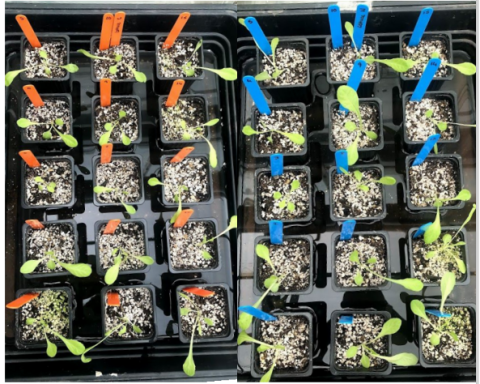
Taking in just ambient air, with the oxygen-enrichment effect getting this to two-thirds oxygen in the NB state, the hydroponic growth of lettuce was almost doubled (about 92% enhanced) compared to tap water for hydroponics! Similar near-doubling was observed for basil and watercress, with the most dramatic effects seen visually during the early stages of growth.

In open-field irrigation in soil, the air-fed improvement for NBs was about 35% for lettuce and 40% for basil, given that the NBs need to diffuse through the soil to reach the roots and plant cell-wall matrix.

For aerosol spray-fog of CO2 NBs for stomatal delivery in leaves, preliminary results indicate an improvement of growth in leafy greens in excess of a third compared to the control, albeit this is more tentative.

Given that “ultra-dense NBs” serve as an efficient and robust delivery agent for nutrients (via electrostatic adsorption to their thick skin), less nutrients are optimal when using NBs in plant growth!

near-doubling of early growth of basil and watercress using nanobubble technology

AquaB Announced as Winner of 2020 IChemE Global Award – Water Category

AquaB has today won the 2020 IChemE Global Award in the Water category. This reflects strong international demand in our core nanobubble-generation technology, and big advances in nanobubble aeration for the activated-sludge process, as well as advances in DAF and ozone nanobubbles for disinfection.

This follows the announcement from October 2020 where AquaB was shortlisted for the 2020 IChemE Global Award.

AquaB was established earlier this year to commercialise a new energy-efficient method to generate and release substantial volumes of metastable, nano-scale gas bubbles in the water. This method is based on research carried out by Professor Niall English and Dr Mohammad Reza Ghaani at UCD’s School of Chemical and Bioprocess Engineering, who are the co-founders of AquaB. AquaB has been shortlisted in the Water Award category.

Professor Niall English, a co-founder of AquaB and a Fellow of the IChemE, said, “I am delighted that AquaB has been shortlisted for the prestigious IChemE Global Awards, and will now compete against other companies and research institutions on a global stage. AquaB is one of the two Irish entrants included in the shortlist is a reflection of the quality and global potential of the chemical-engineering companies emerging from UCD. I now look forward to pitching both companies at the Award webinars in November.”

Keith Batchelor, Chair of the IChemE Global Awards volunteer judging panel, said, “Our peer-reviewed awards recognise the high standard and significant achievements made by chemical engineers around the world providing solutions to some of toughest challenges faced by society.”

“With the skillset and flexibility to adapt to challenges as they occur, during this pandemic we have seen the unwavering efforts of chemical engineers to continue innovating and maintain safe practices. Our judges felt it especially important to recognise these efforts this year, just in a virtual way.”

“Thank you to all those who submitted your remarkable entries and thank you to my fellow judges for your dedication and rigorous assessment. Congratulations to all the finalists and we look forward to sharing your stories and celebrating your success in our first-ever IChemE Global Awards webinar series.”

The winners of this year’s IChemE Global Awards will be announced in a series of webinars, showcasing the finalists, from 2 to 19 November.

AquaB Develops New Ozone-Nanobubble Aerosol Spray to Disinfect Spaces Effectively

AquaB (AquaB Nanobubble Innovations Ltd) has announced its successful development of a novel and exciting technique of generating ozone nano-bubbles in water.

Ozone (O3) is an inorganic gas molecule which has been used for over 100 years as a safe and effective disinfection agent in many industrial and consumer settings. It is a powerful disinfectant, as it oxidises directly and penetrates a pathogen’s cell wall, thereby destroying the pathogen.

Nano-bubbles are minuscule gas bubbles on the nanometre (nm) scale; for reference, a human hair is circa 60,000 – 100,000 nm in width. For many gases, such as oxygen (O2) and methane, they are thermodynamically metastable for many months, or indeed even longer, and due to their enhanced gas-transfer properties and higher de facto gas solubility which they offer, they have many industrial applications – including use in sterilisation or in disinfecting.

In any event, turning to AquaB’s recent generation of ozone nano-bubbles, ozone lifetimes in the nanobubble-aqueous form are substantially increased over and above traditional ozone solvation in water, by an order of magnitude. The ozone concentration may also be set at essentially arbitrarily low or high values by appropriate bubble-generation settings and/or dilution strategies, etc – to comply with all ozone-concentration/exposure guidelines. Ozone-nanobubble generation may be deployed either directly in bulk liquid water (e.g., disinfection of hospital/clinic wastewater), or, interestingly, in the form of aerosol-spray water droplets. The spray constitutes a more effective and energy-efficient way of ‘ozonating’ indoor spaces for prolonged periods in between spray campaigns. This kills bacteria and viruses rapidly and effectively, thereby ‘liberating’ indoor (and crowded outdoor) spaces for gatherings – whether professional, social or sporting. In this case, droplets adhere to surfaces much more, such as chairs, desks, etc. Such spaces would include, inter alia, hospitals, factories, gyms, public transport and stations, classrooms, etc.

These ozone nanobubbles serve as “batteries”, or “reservoirs”, to replenish continually solvated-ozone levels for hours, and their gradual diminution and depletion over these much longer timescales (compared to ozone in the gas phase or traditionally solvated state) affords this “nano-bubbly” water very potent steriliser/disinfectant properties – even more effectively so than chlorine.

Prof. Niall English, AquaB’s CEO said, “After direct ozone-gas generation, we apply our patented, energy-efficient nanobubble-generation method in water by electric-field exposure, giving rise to a combination of ozone (O3) and oxygen (O2) nanobubbles in solution, which act as gas stores to maintain solvated-ozone concentrations at elevated levels for many hours – about an order of magnitude longer than traditional auto-decay timescales of O3 to O2.”

He added, “By deploying these in aerosolised-spray form indoors, and even in crowded outdoor spaces, ozone-nanobubble water droplets tend to adhere, by gravity and direct-spray contact, to surfaces more effectively,  thus ozonating or disinfecting the spaces and killing bacteria and viruses, including potentially SARS-CoV-2. Importantly, for operational considerations, this will allow for more prolonged periods of time in between spraying campaigns.”

Dr Mohammad Reza Ghaani, CTO of AquaB said, “We now plan to collaborate with colleagues to test specifically our ozone-nanobubble technology, focusing especially on aerosol-spray mode as water droplets, as an effective disinfectant/elimination agent vis-à-vis SARS-CoV-2. The company is also in discussions with industry to accelerate the technology’s commercialisation, and we shall also liaise with public bodies.”

Professor English concluded, “We would like to thank Enterprise Ireland for ongoing support, including technology-development funding.”